China’s “15th Five-Year” New Energy Storage Plan: 300 GW Target and a Faster Shift to Market-Driven Growth

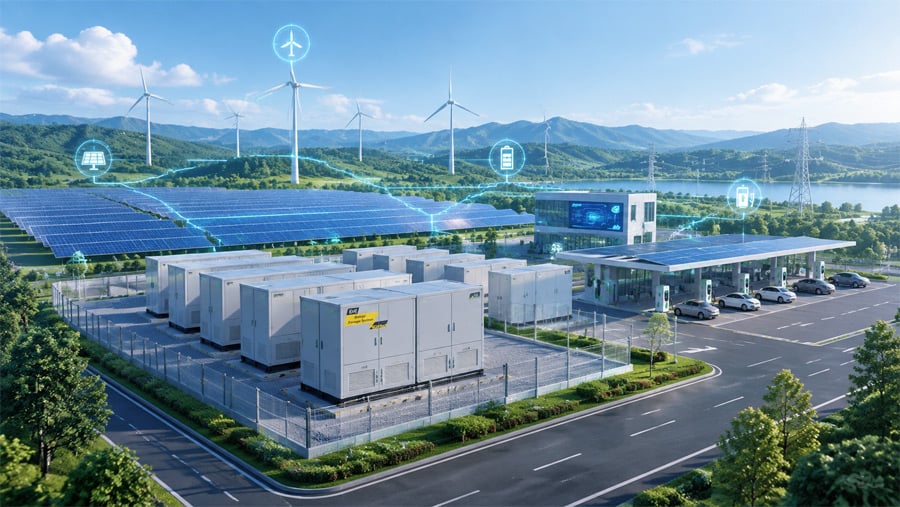
On November 13, 2026, China’s National Development and Reform Commission and National Energy Administration jointly released the Implementation Plan for New Energy Storage During the 15th Five-Year Plan Period. The plan sets a national new energy storage installation target of 300 GW by 2030, with an average storage duration of around 3 hours, and aims to move the industry from a scale-driven phase into a more market-driven development stage.
By the end of September 2026, China’s cumulative new energy storage capacity had reached 167 GW / 435 GWh. Based on the 300 GW and three-hour target, the corresponding energy scale would reach approximately 900 GWh by 2030, more than doubling current levels. For overseas energy storage and charging infrastructure markets, China’s policy evolution, technology iteration, and commercial model innovation will continue to influence global supply chains, product standards, and application scenarios.
How the 300 GW Target Is Structured
The plan provides a clearer breakdown of future storage capacity. By 2030, national new energy storage installations are expected to reach 300 GW, with an average duration of about 3 hours, corresponding to roughly 900 GWh of energy capacity.
Provincial self-use storage will remain the largest segment. During the 15th Five-Year Plan period, new provincial self-use storage demand is estimated at around 110 GW, bringing the 2030 scale to more than 240 GW, or roughly 80% of total new energy storage capacity.
Renewable energy base storage is expected to reach 50–60 GW by 2030, mainly to improve renewable energy utilization and strengthen the reliability of transmission corridors.
Grid-side independent storage will play a more prominent role. By 2030, grid-side independent new energy storage capable of supporting peak supply is expected to reach about 140 GW, focusing on peak shaving, frequency regulation, voltage support, emergency backup, ramping support, and black-start services.
This structure signals that new energy storage is moving from a supporting accessory toward a system-level resource with clearer capacity value.
Three Application Scenarios Will Drive New Demand
The plan outlines three major application directions: generation side, grid side, and innovative scenarios.
On the generation side, new energy storage will support large renewable bases such as desert, Gobi and barren land areas, hydro-wind-solar integrated bases, and offshore wind farms. Storage will help improve renewable energy absorption and enhance transmission reliability. By 2030, renewable energy bases are expected to be equipped with 50–60 GW of new energy storage.
On the grid side, independent storage will become a key flexibility resource. The plan supports the development of grid-side independent storage, distributed storage at the distribution network level, and grid-substitution storage that can help defer or replace part of traditional grid investment.
In innovative scenarios, new energy storage will be further integrated into source-grid-load-storage systems, green power direct supply, smart microgrids, virtual power plants, zero-carbon parks, optical-storage-charging-discharge systems, vehicle-to-grid interaction, and data center energy coordination. These scenarios are highly relevant to overseas commercial and industrial storage, campus energy management, charging infrastructure upgrades, and AI-driven power-demand management.
Market Mechanisms Are Moving from Scale to Value
A central shift during the 15th Five-Year Plan period is the transition from policy-driven expansion to policy guidance combined with market-driven operation. The plan calls for improving capacity tariffs, time-of-use pricing, and market participation rules, enabling new energy storage to participate more fairly in energy markets, ancillary service markets, and capacity markets.
The goal is to build diversified revenue streams, including capacity tariffs, energy tariffs, ancillary services, and new business models such as virtual power plants and integrated energy services. This direction is intended to address the industry’s previous challenge of prioritizing installed capacity over profitability, and to improve project returns through clearer market signals.
Technology Roadmap: Lithium-Ion Leads, Multiple Technologies Advance
The plan maintains a diversified technology outlook. Lithium-ion battery storage will continue to lead, while sodium-ion battery storage is expected to see broader application. Long-duration and grid-forming technologies, including compressed air energy storage, flow batteries, and flywheel storage, are expected to move from pilot projects toward commercial deployment.
Grid-forming storage will be promoted in a steady and scenario-driven manner, with supporting technical requirements gradually improved. The plan also encourages coordination among short-duration, medium-duration, and long-duration storage technologies, as well as exploration of electricity, heat, and hydrogen storage for multi-day or seasonal regulation needs.
For overseas customers, this means competition will increasingly focus on safety, cycle life, system efficiency, grid-forming capability, long-duration performance, intelligent O&M, and lifecycle cost, rather than nameplate capacity alone.
What China’s Storage Transition Means for Global Markets
China’s shift toward market-driven new energy storage will have several implications for global stakeholders:
- More mature product standardsLarge-scale domestic deployment will further refine requirements for battery systems, PCS, EMS, fire protection, and cybersecurity, supporting more reliable overseas delivery.
- Clearer business modelsCapacity tariffs, ancillary services, virtual power plants, and optical-storage-charging models can provide references for overseas C&I, campus, and charging-site projects.
- Broader application scenariosStorage is evolving from a compliance-driven add-on into a value-generating asset across renewable integration, microgrids, data centers, zero-carbon parks, and EV charging ecosystems.
EVCity: Powering Global Markets with Smart Storage & Charging Solutions
EVCity stands at the forefront of overseas energy storage and charging infrastructure, keeping a pulse on the evolution of new energy and modern power systems worldwide. We specialize in delivering solutions for C&I parks, public charging hubs, microgrids, and distributed energy scenarios—fully adaptable to varying grid conditions and operational demands.
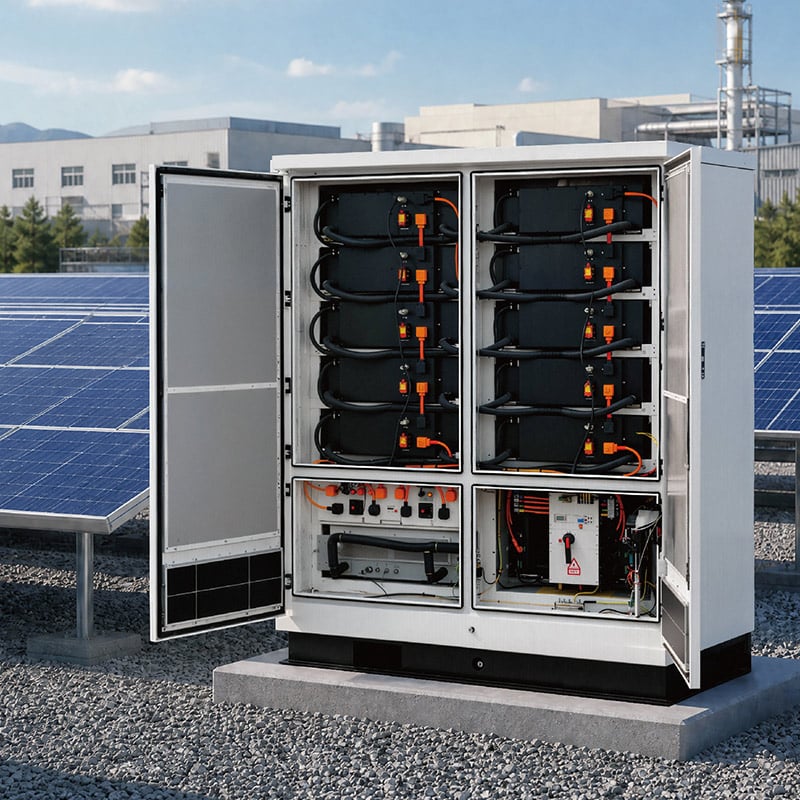
We know that for overseas markets, meeting capacity targets is just the baseline. Systems must also survive harsh realities: extreme heat, humidity, salt mist, unstable grids, and rising maintenance costs. That’s why EVCity prioritizes modular design, rigorous safety compliance, remote monitoring, and seamless platform integration. Our mission is to empower overseas operators, EPCs, developers, and industrial park clients to maximize energy efficiency while driving down lifecycle costs.
As China’s 15th Five-Year Plan accelerates the marketization of new energy storage, EVCity will continue to track global policy, technology, and market developments. We aim to help overseas developers, EPC contractors, operators, and park customers build safer, more flexible, and more commercially viable energy storage and charging infrastructure.